
Topic 10 of 12
Optimization and Performance
The techniques that come up most in practice to make a system fast: caching, asynchronous processing, concurrency, efficient SQL and CDNs.
What to study
- Cache-Aside Pattern
- Asynchronous jobs
- Concurrency and parallelism
- SQL optimization and performanceN+1 problem · Indexes
- CDN
Visual examples
GET /api/v1/products/best-sellers
No cache
Every request hits the database — the same heavy query runs thousands of times.
Cache-Aside
The API checks the cache first. Only on a miss does it query the database and write the result to the cache.
Without asynchronous processing
The client waits for everything to finish — sending email, generating a PDF, calling external services — before getting a response.
With asynchronous processing
The API just publishes a message to the queue and responds right away. Workers handle the heavy lifting in the background.
One query to fetch the list and then one extra query for each item. With 500 users, that's 501 trips to the database.
❌ N+1 — one query per user
import sqlite3

conn = sqlite3.connect('example.db')
cursor = conn.cursor()

cursor.execute("SELECT id, name FROM users")
users = cursor.fetchall()

for user_id, name in users:
    cursor.execute(
        "SELECT title FROM articles WHERE user_id = ?",
        (user_id,),
    )
    articles = cursor.fetchall()
    # 1 + N queries...
✅ A single query with a JOIN
cursor.execute("""
    SELECT u.id, u.name, a.title
    FROM users u
    LEFT JOIN articles a ON a.user_id = u.id
""")
rows = cursor.fetchall()

# SQL run by the N+1 code:
# SELECT id, name, email FROM users;
# SELECT title FROM articles WHERE user_id = 1;
# SELECT title FROM articles WHERE user_id = 2;
# ...
# SELECT title FROM articles WHERE user_id = 500;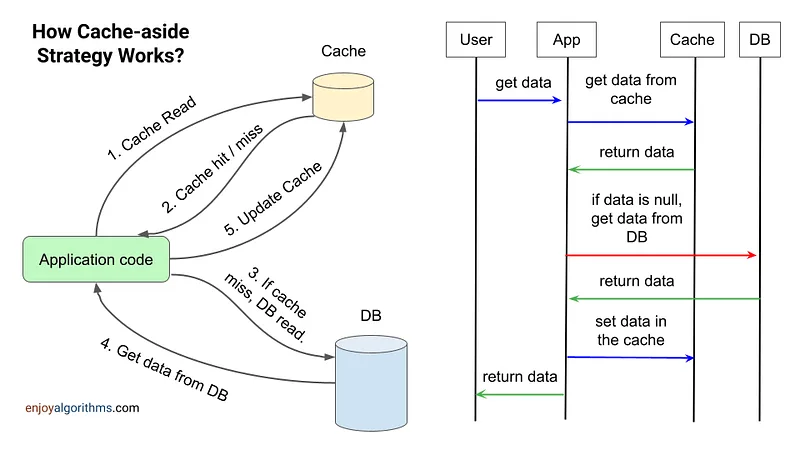
Articles7
- Cache-Aside patternAzure Architecture CenterEN
- An Introduction to Asynchronous Processing and Message QueuesMediumEN
- RabbitMQ DocumentationRabbitMQEN
- Concurrency vs parallelism: the main differencesOxylabsEN
- O que é o problema de N + 1?MediumPT
- SQL Performance TuningGeeksforGeeksEN
- What is a Content Delivery Network (CDN)?GeeksforGeeksEN